



An Underrated Recycled Plastic Market: Mexico Is Rewriting the North American Industrial Landscape
For a long time, the United States and Europe have been the focal points of global plastic circular economy development. In recent years, with the advancement of circular economy legislation, the implementation of sustainability commitments by brand owners, and the continuous improvement of recycling infrastructure, Mexico is emerging as an indispensable new force in the global recycled plastics industry.
For Chinese companies focusing on the North American market, understanding the development logic of Mexico’s plastic recycling and regeneration system has become a crucial topic for seizing future opportunities in the region.
I. The market for recycled materials in Mexico is expanding rapidly.
Plastics have become one of the fastest-growing segments in Mexico's recycled materials market.
According to IMARC Group’s estimates, the size of Mexico’s waste plastic recycling market will be approximately $555 million in 2025 and is projected to reach $1.08 billion by 2034, with a compound annual growth rate (CAGR) of 7.78%. In comparison, Mexico’s metal recycling market ranges from $3.8 billion to $8.3 billion (with significant variations depending on the source), but its growth rate is only between 1.2% and 3.93%.
Plastic recycling in Mexico is a small but fastest-growing sector, with a growth rate approximately twice that of metals.
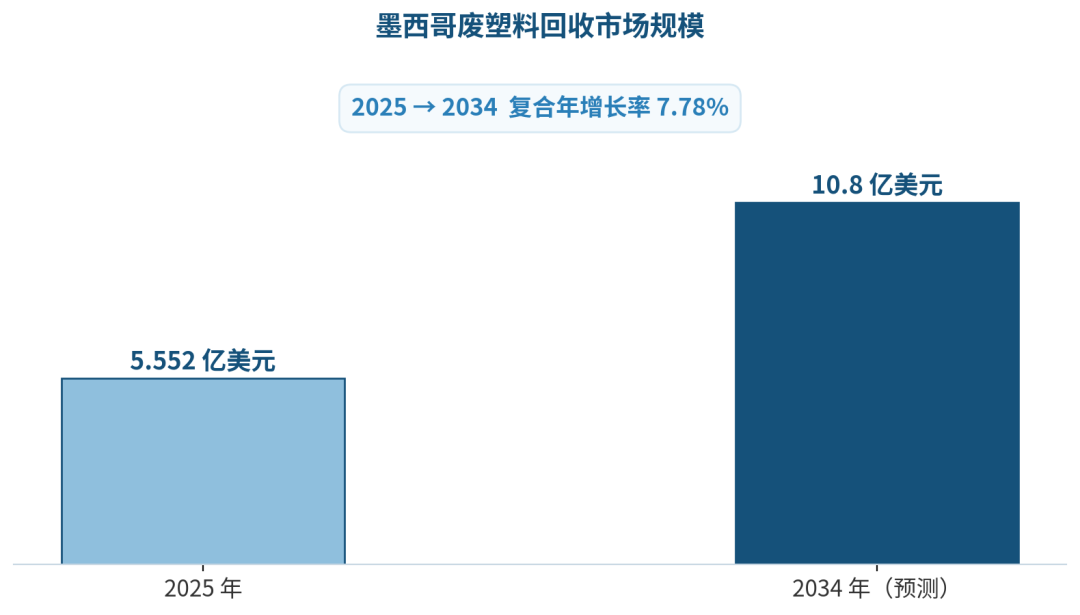
Figure 1. Mexico's Waste Plastic Recycling Market Size | Data Source: IMARC Group
The packaging industry is the core force driving market development. As international brands continue to increase their use of recycled materials, demand for post-consumer recycled (PCR) plastics in Mexico’s plastic packaging sector is rising. Meanwhile, growing attention to sustainable materials within North American manufacturing supply chains is also expanding the applications for recycled plastics.
II. PET Recycling Rate Ranks Among the Highest in the Americas
If there is one sector that best exemplifies Mexico’s achievements in circular economy development, it is undoubtedly PET.
In 2024, Mexico’s PET recycling rate reached 64%, surpassing the United States’ 28% as well as Brazil’s and the European Union’s 56%. This achievement places Mexico among the leaders in PET recycling in the Americas.
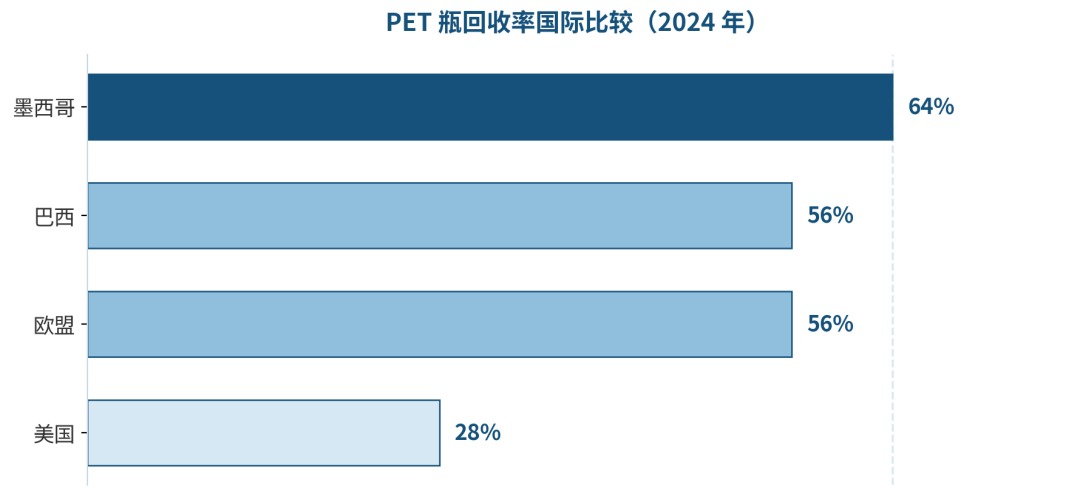
Figure 2. International Comparison of PET Bottle Recycling Rates (2024) | Data Source: ECOCE and Industry Statistics
Currently, Mexico has approximately 27 PET recycling plants with an annual installed processing capacity of about 757,000 metric tons, capable of handling around 81% of the PET packaging in the market. Over the past decade, the industry has invested more than $700 million in building PET recycling and regeneration systems.
These data indicate that Mexico has established a relatively mature recycling and regeneration system in the PET sector, forming an industrial chain foundation that spans collection, sorting, and recycling.
A representative case is PetStar. Supported by the Coca-Cola system, this facility completed its expansion in Toluca in 2025, investing 2.6 billion Mexican pesos to increase its annual production capacity of food-grade recycled resin from 50,000 tons to 86,000 tons, while processing over 123,000 tons of PET waste annually. The recycled resin is directly reintegrated into the supply chains of bottling companies.
III. Industry Collaboration to Promote the Circular Economy of Plastic Packaging
More noteworthy than market size is the direction of industry development.
Under the implementation of the General Law on Circular Economy (LGEC), industry mechanisms such as ANNEP and REP are driving the transition of Mexico’s plastic packaging sector toward a circular economy. The 77 companies participating in the National Agreement for a New Plastics Economy (ANNEP) account for approximately 51% of Mexico’s plastic packaging market share.
According to the data disclosed in the fifth annual report:
76% of companies have already adopted recycled materials; the average share of post-consumer recycled content in new packaging has reached 24%, exceeding the original target of 20%; 80% of packaging is now reusable, recyclable, compostable, or recoverable; the plastic packaging recycling rate has reached 34%, surpassing the 2025 target of 30%; and 77 signatories have collectively invested 1.2 billion Mexican pesos (approximately USD 64.6 million) in building recycling infrastructure.
It should be noted that the aforementioned 34% recycling rate reflects the plastic packaging recycling performance within the scope of companies participating in the ANNEP project, and does not represent the overall recycling rate for all plastic waste nationwide in Mexico. As these companies are predominantly large brand owners and packaging manufacturers, their data cannot be considered representative of the national average.
These achievements demonstrate that recycled plastics are no longer merely environmental initiatives undertaken by a few companies, but are gradually becoming an integral part of Mexico’s packaging industry.
IV. The Circular Economy General Law Brings New Industrial Opportunities
On January 19, 2026, Mexico officially enacted the General Law on Circular Economy (Ley General de Economía Circular, LGEC), which entered into force the following day. This marks Mexico’s first nationwide legal framework for circular economy, extending regulatory scope from waste management to the entire life cycle of product design, production, and use, while also amending the General Law on Ecological Balance and Environmental Protection and the General Law for the Prevention and Comprehensive Management of Waste.
The core of this law is to enshrine Extended Producer Responsibility (EPR) in legislation. Producers and importers are held accountable for the entire product lifecycle, including the post-consumer stage. Companies must register a “Circular Management Plan” with the Ministry of Environment and Natural Resources (SEMARNAT), detailing product design, material composition, and recycling pathways. Circular design thus transitions from a voluntary best practice to a legal obligation.
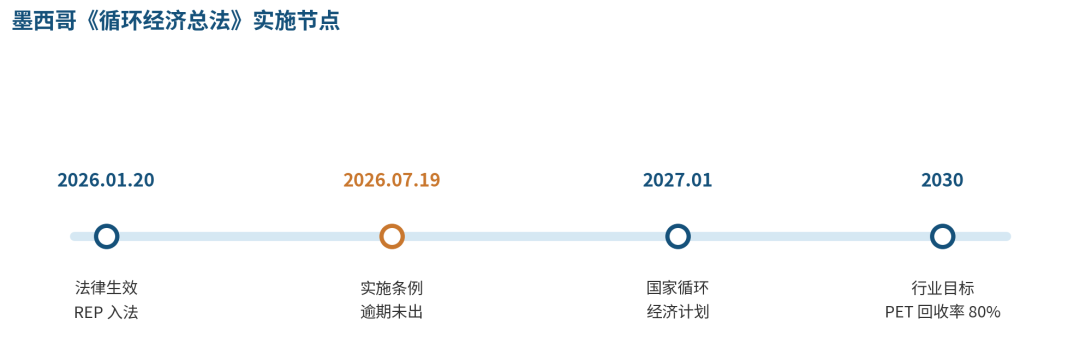
Figure 3. Implementation milestones of Mexico’s General Law on Circular Economy | Data source: Mexico’s Federal Official Gazette and legal interpretations by relevant parties
From a timeline perspective, the legal framework is already in effect, while specific quantified obligations for various materials are still being developed. The implementing regulations, originally scheduled to be published in mid-July 2026, have not yet been issued. The National Circular Economy Plan, with a deadline of mid-January 2027, will establish formal targets and implementation tools by product and industry. However, registration obligations do not depend on the implementing regulations and are already being enforced.
According to SEMARNAT’s “2026 Basic Diagnostic Report on Integrated Waste Management,” Mexico generates 139,902 metric tons of municipal solid waste daily, amounting to approximately 1.076 kilograms per capita; of this, 36.26% consists of materials with recycling potential, but currently only about 5% receives any form of processing.
The 5% figure represents the overall treatment rate of municipal solid waste, including organic matter and other non-recyclable components. It is not calculated using the same methodology as the recycling rate for a single material type and therefore should not be directly compared.
From a structural perspective, PET has made significant progress, but other plastic categories still have considerable room for improvement. Industry estimates indicate that the recycling rate for plastics other than PET is around 30%, with high-density polyethylene (HDPE) at approximately 25%, leaving a gap to meet the 45% target set for 2030.
This is also a key reason why sorting technologies, recycling infrastructure development, food-grade recycled resins, and chemical recycling have garnered increasing attention in recent years. Mexico’s current bottlenecks lie not only in the recycling stage but also in the sorting stage, where manual labor still predominates. There is clear potential for the application of automated, optical, and AI-based sorting systems.
V. Why the North American Market Must Be Viewed Through the Lens of Both the United States and Mexico
The United States and Mexico together constitute a significant market for the North American plastic circular economy, with close ties between the two countries in manufacturing and packaging supply chains. As circular economy policies continue to advance and the application of recycled materials expands, Mexico’s importance within the North American plastic circular industry chain is steadily rising.
For Chinese companies seeking to expand into overseas markets, focusing solely on the United States is no longer sufficient to gain a comprehensive understanding of the development trends in North America’s plastic circular economy. By simultaneously observing policy changes, recycling system infrastructure, and recycled material applications in both the U.S. and Mexican markets, companies can better grasp the future direction of the North American market.
From February 28 to March 11, 2027, the New Observation of Waste Plastics organization will conduct a business tour of the U.S. plastic recycling and regeneration industry, with an itinerary that includes Mexico.
The first four days were spent in Washington, D.C., attending the U.S. Plastics Recycling Conference from March 1 to 3, where we engaged in face-to-face discussions with North American recycling companies, brand owners, industry associations, and NGOs, and visited organizations such as the Association of Plastic Recyclers (APR). We then traveled to Charlotte and Atlanta, arranging visits to two companies in each city, covering segments across recycling, reprocessing equipment, recycled resin trading, and finished products manufacturing.
On March 7, fly from Atlanta to Mexico. On the 8th and 9th, visit two local companies each day to gain insights into the current state of the plastic recycling and reprocessing industry and the latest trends in the North American market.
As the North American circular economy system continues to evolve, Mexico is becoming an important window for observing changes in the regional plastic recycling and regeneration market. The period during which the legal framework has taken effect but quantitative targets are still being formulated is a critical window for assessing the market landscape.
【Copyright and Disclaimer】The above information is collected and organized by PlastMatch. The copyright belongs to the original author. This article is reprinted for the purpose of providing more information, and it does not imply that PlastMatch endorses the views expressed in the article or guarantees its accuracy. If there are any errors in the source attribution or if your legitimate rights have been infringed, please contact us, and we will promptly correct or remove the content. If other media, websites, or individuals use the aforementioned content, they must clearly indicate the original source and origin of the work and assume legal responsibility on their own.
Most Popular
-
2026 First-Half Polypropylene Market Review And Trend Outlook
-

Key Players: The 10 Most Critical Publicly Listed Companies in Solid-State Battery Raw Materials
-
Another Brominated Flame Retardant Restricted! DBDPE Listed As SVHC, Modified Plastics Brominated Flame Retardant System Faces Change
-
European Union (EU) Launches Anti-Dumping Investigation into China’s PBAT! China’s One-Million-Ton Biodegradable Plastic Production Capacity Faces a Critical Test
-
Turkey: Anti-dumping Measures on Waterproof Tarpaulins Made of Chinese Polyethylene and Polypropylene, as well as Polymer Plastic Products, Set to Expire