



Ai vision system revolutionizes plastic quality inspection
Artificial intelligence empowers visual systems to identify subtle defects in plastics in real-time, reducing waste generation and enhancing quality control levels.
Companies such as Krevera and Cognex are deploying advanced artificial intelligence vision systems to reduce waste rates and improve manufacturing efficiency.
Artificial intelligence possesses rapid data analysis capabilities, which is particularly useful in the plastic manufacturing industry for real-time defect detection in component visual systems.
Traditional vision systems rely on cameras installed at key points in automated processes to determine whether parts are in place and whether they are oriented correctly. With the introduction of artificial intelligence, real-time defect detection capabilities for components have improved exponentially, providing manufacturing enterprises with unprecedented quality control tools.
Sebastian Schneeweiss, co-founder and Chief Content Officer of Krevera, stated that, for example, Krevera has developed a proprietary vision system for the plastic injection molding industry, and the scale of its training dataset "exceeds that of all competitors."
Schneeweiss continued, saying that the difficulty of visual inspection lies in identifying what he calls chemical defects.
A regular vision system can check whether there are six bottles of beer in a six-pack, which is quite simple. However, when you simultaneously check all six bottle caps and determine whether they are deformed, the difficulty increases significantly.
康耐视产品管理高级经理Georges Gauthier表示,康耐视也在从零打造人工智能驱动的视觉系统,帮助制造企业“更早发现外观缺陷与结构缺陷,减少废料与返工,提升良品率,降低误判报废情况,并且可以按照生产节拍完成全流程百分百在线检测”。
Georges Gauthier added that plastics manufacturing is highly suited to AI-based visual inspection, “because many common defects in plastics are inherently uncertain. The surfaces of injection-molded parts may be reflective, textured, colored, or transparent, making it difficult for traditional rule-based systems to achieve stable detection. AI, however, can learn from samples and adapt to the various changes encountered in real-world production, which is why it performs exceptionally well in these scenarios.”
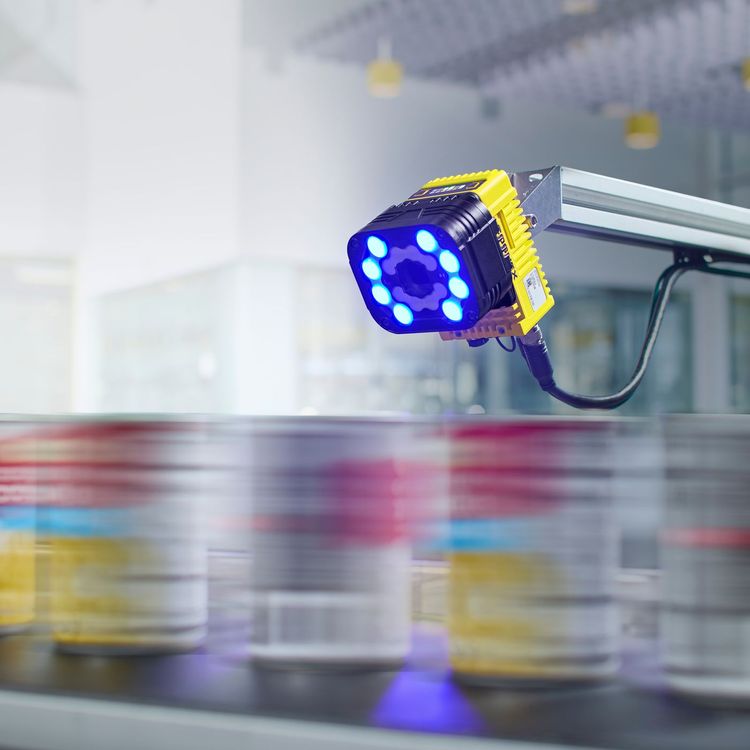
Artificial intelligence vision is becoming a fundamental technology for Industry 4.0 and Industry 5.0 projects.
Krevera: Fine-Grained Defect Detection
To address the need for identifying chemically induced defects, Krevera’s AI vision system overcomes the limitation of non-AI vision systems, which require frequent calibration. Schneeweiss confirmed that the system’s training data covers “all kinds of dust and stains on lenses, almost every imaginable lighting condition, as well as samples of various missing-material and flash defects on products.”
Krevera’s specialized system can identify multiple types of flash defects, including:
- Overflow
- Material shortage
- Silver streaks caused by moisture in the plastic or screw shear failure
- Poor mold ventilation allows pressure to induce chemical reactions in the material, resulting in burn marks.
The operating conditions that cause flash defects are extremely complex. “The form in which defects emerge from the mold is completely random, and their appearances are highly varied. Even for the same short-shot defect, the manifestations of two products can be entirely different.”
Schneeweiss explained that for traditional vision systems to detect such subtle defects, they must be set to extremely high sensitivity and recalibrated about every two weeks. Even so, stains on the lens can still interfere with inspection accuracy, resulting in false defect reports where none exist.
"Assuming the factory's production environment is poor and the lenses are covered with dust and dirt," Schneeweiss said, "the vision system will classify all products as defective. When lighting conditions change, each pixel generates subtle differences, and the system will similarly classify all products as non-compliant. Generally speaking, the higher the sensitivity of the vision system is set, the more false positives will occur."
Manufacturing companies will try to position cameras as close as possible to areas where defects frequently occur to address this issue.
“如果摄像头紧贴缺陷发生位置,缺陷一旦产生很容易识别,因为画面有30%的像素都出现异常。但我们处理的典型产品是27加仑大型周转箱或者5加仑水桶,缺陷只有一平方毫米大小,而摄像头距离产品有三英尺。此时系统要在画面占比不足1%的区域里寻找缺陷。而镜头积灰、光照变动、产品摆放偏移、摄像头移位这些生产中常见问题,给画面带来的改变远大于1%。可只要整张图片出现1%的变化,系统就会判定产品不合格。”
Krevera这套人工智能视觉系统已经给注塑厂商带来实实在在的可观收益。
We focus on solving three major problems: material waste, labor costs, and equipment utilization rates. These are precisely the main pain points in our customers’ production and operations. For regular clients, we can help reduce material waste by 70% to 90%. Through automation upgrades, direct labor costs can be reduced by about 80%. All of the above data comes from statistics provided by the financial departments of our client companies.
Kangnai Vision: Centered on artificial intelligence, using a hybrid detection solution.
Cognex also adopts an AI-first approach in developing vision systems, using real production images for model training. The In-Sight 3900 is its latest generation vision system.
Georges Gauthier stated, "Plastic manufacturing companies face unique inspection challenges: many defects can be easily identified by skilled workers but are difficult to define with fixed rules. Scratches, sink marks, flash, missing material, discoloration, burn marks, and various subtle surface flaws can present different appearances depending on the material, color, texture, transparency, and surface treatment process. Cognex leverages artificial intelligence inspection tools, learning from real production images to help companies distinguish between normal process variations and actual product defects. The artificial intelligence operates directly at the edge, allowing inspection to match production speed without compromising accuracy and efficiency."
Cognex’s artificial intelligence is not an add-on feature, but is designed as a core capability. The system integrates advanced AI tools with traditional rule-based machine vision, allowing enterprises to flexibly choose appropriate solutions for different inspection tasks.
Georges Gauthier explained: “For plastics processing companies, this means that at the same inspection station, traditional vision tools can be used to verify dimensions and assembly status, while artificial intelligence can be used to identify appearance-related and highly variable defects that are difficult to capture through rule-based programming. Artificial intelligence does not replace traditional machine vision; rather, it expands the range of applications in which reliable automated inspection can be achieved in the plastics industry. This hybrid approach is particularly valuable in production scenarios where there are significant appearance differences from part to part.”
For example, a consumer packaging company that produces injection-molded bottle caps can leverage an AI vision system to conduct real-time inspections of each product. The system can distinguish between normal production variations and genuine defects, ensuring quality standards while reducing reliance on manual inspection.
人工智能视觉在塑料制造行业的未来
Georges Gauthier proposed that with the simultaneous development of Industry 4.0 and Industry 5.0, the continuous iteration of artificial intelligence technology will lead to an accelerated adoption of AI visual technology in the plastic manufacturing industry in the coming years. Manufacturing enterprises are facing increasing pressure to improve quality, reduce waste, alleviate labor shortages, and achieve more flexible production. AI visual technology will become a foundational technology for Industry 4.0 and Industry 5.0 projects. Before robots can execute actions and analysis platforms can optimize production, companies need reliable product quality data. AI visual technology can identify defects in real-time and output inspection data, assisting enterprises in making swift and informed decisions. Applied to plastic production, this means improved yield rates and reduced waste, ensuring that every product coming off the line meets quality standards.
Cognex’s latest device is designed for connected factory scenarios, equipped with dual communication ports to support real-time decision-making on the shop floor, while also enabling data exchange with upper-level enterprise monitoring systems.
【Copyright and Disclaimer】This article is the property of PlastMatch. For business cooperation, media interviews, article reprints, or suggestions, please call the PlastMatch customer service hotline at +86-18030158354 or via email at service@zhuansushijie.com. The information and data provided by PlastMatch are for reference only and do not constitute direct advice for client decision-making. Any decisions made by clients based on such information and data, and all resulting direct or indirect losses and legal consequences, shall be borne by the clients themselves and are unrelated to PlastMatch. Unauthorized reprinting is strictly prohibited.
Most Popular
-

Rhein River Water Level Hits Record Low! Covestro And BASF Announce Force Majeure For Some Products
-
又一项“卡脖子”材料被攻克!仁信新材10万吨光学级PMMA剑指日韩垄断
-

[Overseas News] Adipic Acid Prices Rise Again! U.S. Issues 337 Investigation Ruling; BASF Shuts Down Two Major Care Chemicals Plants in India
-

$4.5 billion valuation sparks capital pursuit! Ashland officially launches comprehensive sale evaluation
-

ExxonMobil Launches New High-Performance Resin for Rotational Molding


