



30-Year-Old IP Surges 36%! Hasbro Q1 Net Profit Doubles
While traditional toy manufacturers are still struggling under the shadow of tariffs, Hasbro has showcased the true moat of an IP-driven company with a remarkably impressive financial report.
On May 20, Hasbro released its Q1 financial report. Net revenue exceeded $1 billion, up 13% year over year; adjusted operating profit surged 29% to $287 million, with the margin expanding by nearly 4 percentage points to 28.7%.
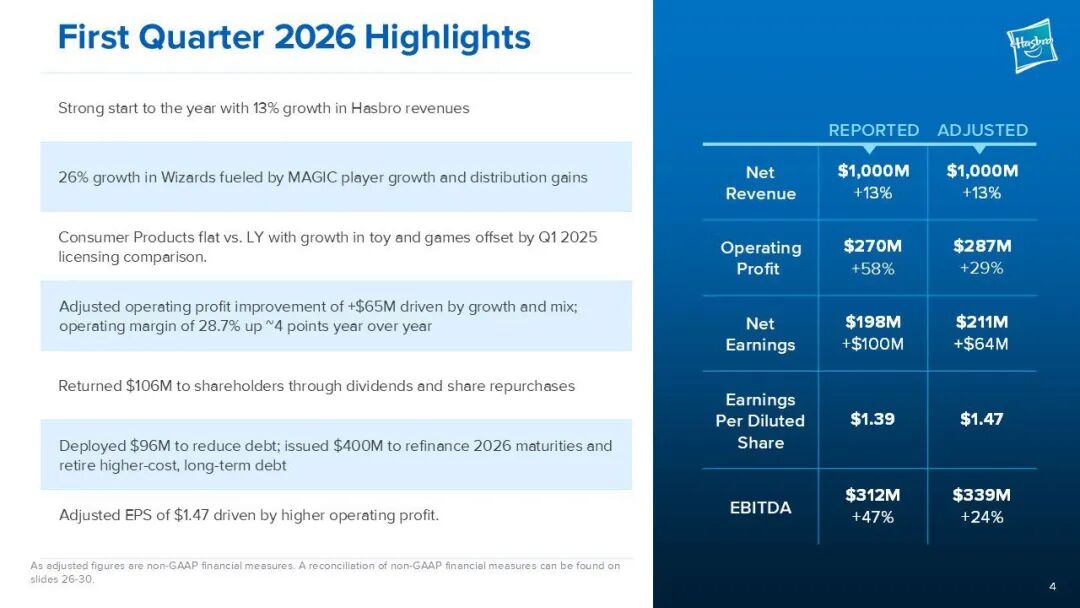
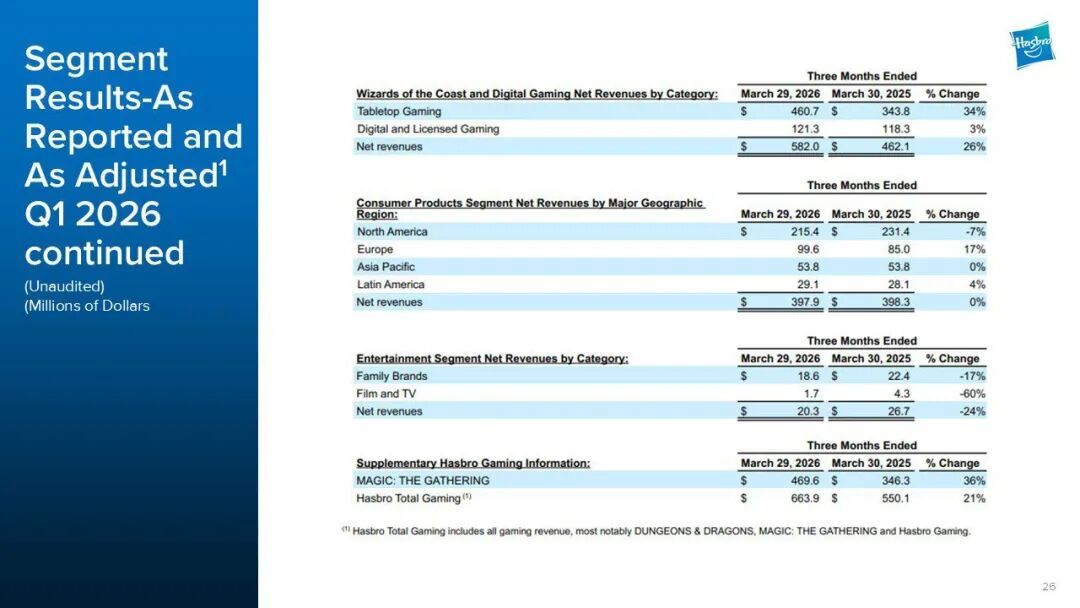
Among them, the standout performer was the Wizards of the Coast division. The segment posted Q1 revenue of $582 million, up 26% year over year, with Magic: The Gathering alone contributing 36% growth and revenue approaching $470 million.
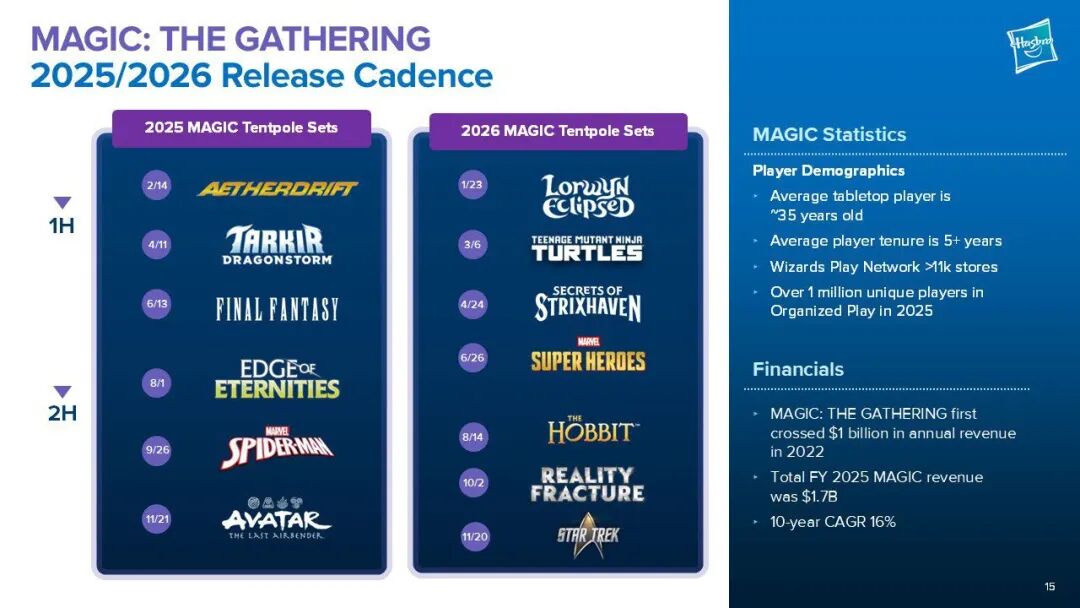
This card game, born in 1993, still maintains a growth curve more aggressive than that of most tech startups more than three decades later. Notably, the average player age is around 35, the average player has been involved for over five years, the global organized player network covers more than 11,000 stores, and in 2025 the number of independent players participating in official tournaments surpassed one million. This is not merely nostalgia-driven consumption, but a highly mature, self-reinforcing ecosystem.
In addition, the "Universes Beyond" crossover series demonstrates remarkable strategic sophistication. By bringing external IPs such as Teenage Mutant Ninja Turtles and Marvel superheroes into the Magic: The Gathering universe, it not only reduces the risks associated with developing original content, but also continues to attract new players through crossover-driven expansion beyond its traditional audience. When a tabletop game is no longer just a game, but an open platform capable of hosting a wide range of IPs, its commercial potential expands dramatically.
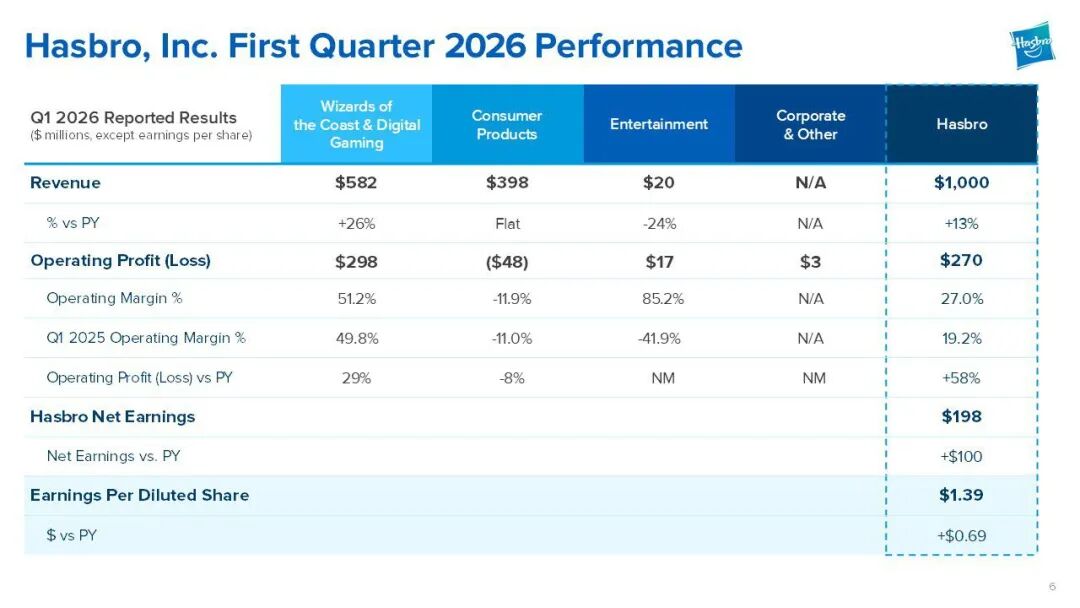
In stark contrast to Hasbro's rapid progress, the consumer goods division has remained almost stagnant. Q1 revenue was $398 million, flat compared to the same period last year. Analyzing the operational data, the adjusted operating loss in this division widened to $41 million, with the profit margin sliding further from -7.8% to -10.2%.
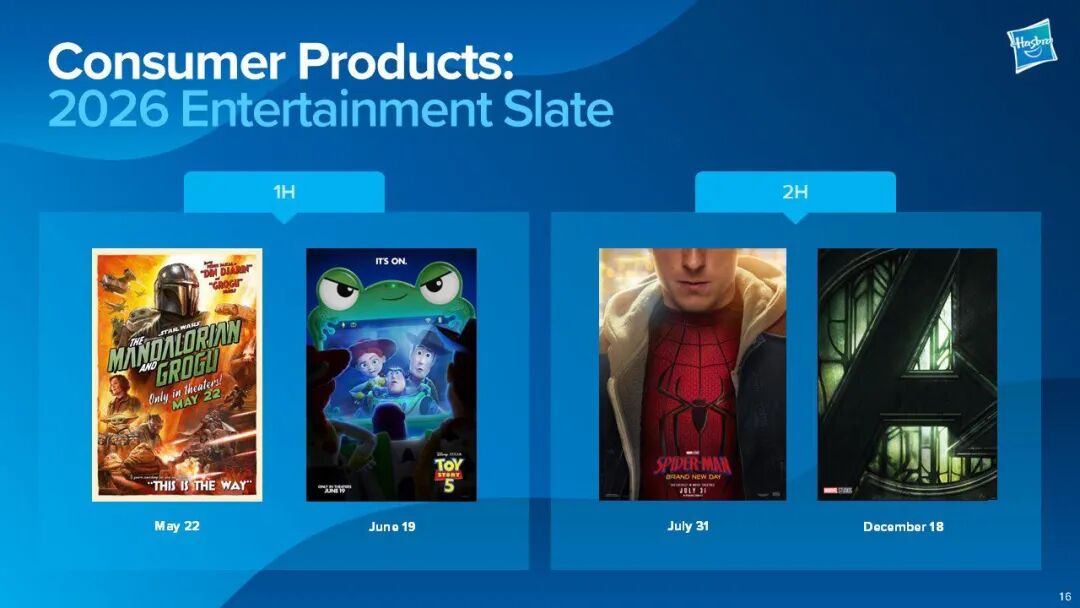
But there were still bright spots. Star Wars toys saw strong momentum ahead of the release of the film *The Mandalorian and Grogu*, while Beyblade, Hasbro Gaming, Marvel, and Peppa Pig achieved growth at retail. However, these gains were offset by declines in NERF, Play-Doh, and certain Star Wars categories.
The regional mix is even more concerning. Revenue in North America declined 7%, Europe grew 17%, and Asia-Pacific remained flat. When domestic demand weakens in the world’s largest toy market, even with the cushioning effects of exchange rates and overseas markets, this is not a signal to take lightly.
Despite pressure on the consumer goods sector, Hasbro maintains its full-year guidance, expecting revenue growth of 3% to 5% at constant exchange rates and an adjusted operating margin of 24% to 25%. This means greater momentum is needed in the second half of the year. Fortunately, the Magic: The Gathering 2026 product calendar is packed, with crossover series such as The Hobbit and Star Trek set to launch in the second half. The consumer goods division will also experience a sales peak driven by movie IP releases including Spider-Man and Toy Story 5.
Overall, this financial report is, to some extent, a microcosm of the entire toy industry. Businesses with strong IP and player ecosystems are rapidly diverging from those driven by traditional retail. Hasbro is no longer simply a toy manufacturer, but an entertainment company centered on IP, spanning physical and digital experiences, and connecting players with content platforms. As the definition of “play” continues to broaden, only brands that can build communities, drive repeated engagement, and be passed down across generations can truly endure through cycles.
Of course, tariffs, geopolitical risks, and the cybersecurity incident that emerged at the end of March still cast a shadow over this strong earnings report. The legal and remediation costs that began to arise in Q2 have yet to reveal their full impact. Under its “Playing to Win” strategic banner, Hasbro must not only win over players, but also prove it can keep scoring in a prolonged battle against the macro environment.
【Copyright and Disclaimer】The above information is collected and organized by PlastMatch. The copyright belongs to the original author. This article is reprinted for the purpose of providing more information, and it does not imply that PlastMatch endorses the views expressed in the article or guarantees its accuracy. If there are any errors in the source attribution or if your legitimate rights have been infringed, please contact us, and we will promptly correct or remove the content. If other media, websites, or individuals use the aforementioned content, they must clearly indicate the original source and origin of the work and assume legal responsibility on their own.
Most Popular
-

A Look at the Material Suppliers Behind SpaceX
-

Two Major Chemical Giants to Shut Down, Sell Again
-

Global chemical industry shaken again! amsty and plastic energy announce bankruptcy, accelerating plastics sector shake-up
-

$80 Million Hammered Down! TMD Business Acquired By TNJ Ohio After Judicial Ruling
-

ENGEL at Plastpol :2026 Intelligent production solutions for stable manufacturing processes


