



2000 TOPS Is Just the Starting Point? Domestic Chips Begin to Lead
In the AI era, computing power has become the new “oil”.
Especially in the field of intelligent driving, the level of computing power, as well as the degree of matching between algorithms and chips, directly affects the implementation effectiveness of functions.
To avoid being choked off by technological bottlenecks, an increasing number of domestic manufacturers are embarking on the path of developing their own high-computing-power chips.
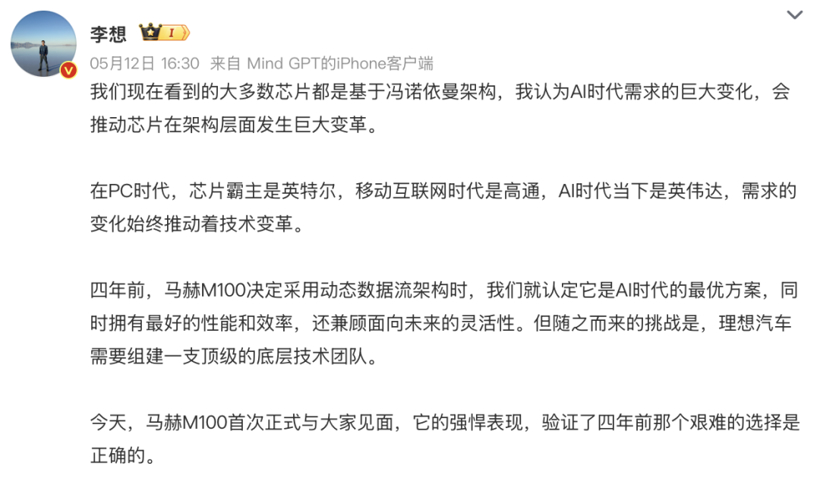
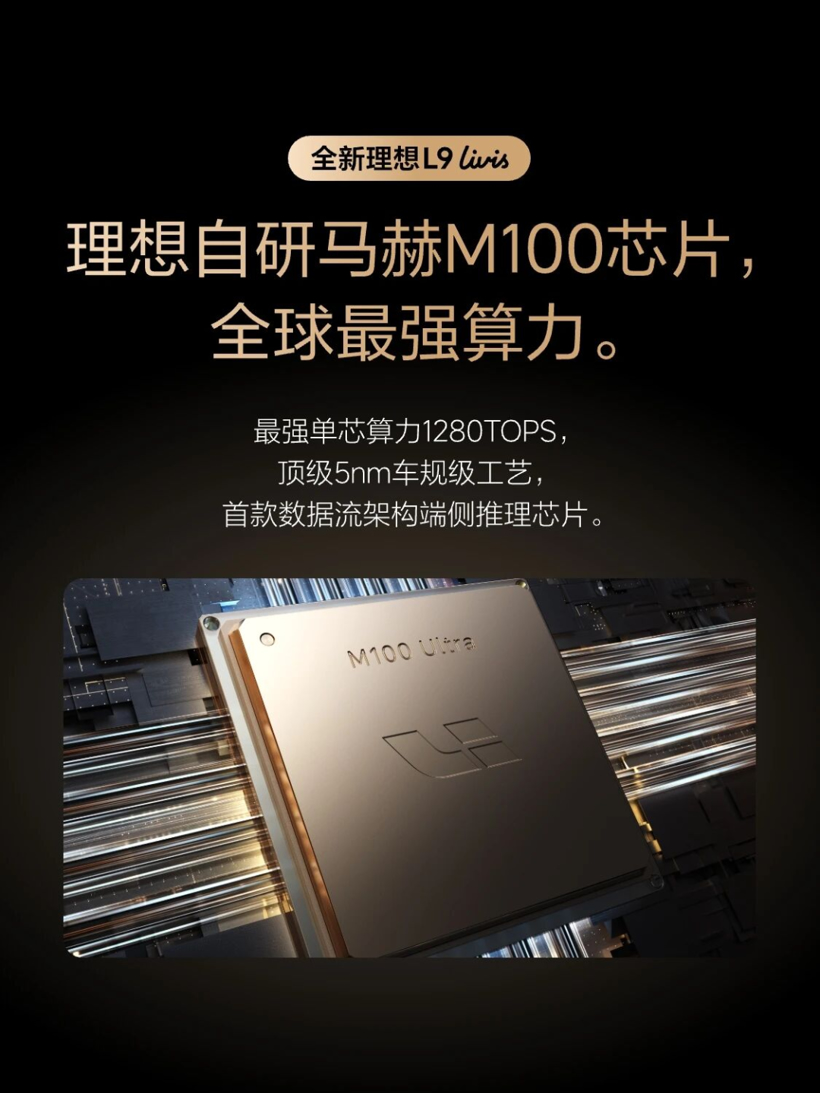
XPeng has launched the Turing AI chip, with a single-chip computing power of 750 TOPS; NIO has introduced the Shenji NX9031, with a single-chip computing power of 1,000 TOPS; Li Auto has also released its self-developed Mahe M100 chip, with a single-chip computing power of up to 1,280 TOPS, which will debut in the all-new Li Auto L9 Livis.
In addition to in-house development, manufacturers can also choose to cooperate with excellent chip suppliers. For example, the domestic supplier Horizon Robotics, with its high cost-effectiveness and open ecosystem, has already occupied half of the market.
As one of the core pillars of smart user experience, chips are becoming an important consideration when people choose a car.
We have compiled a list of mainstream chips for your reference.

Some of the chips mentioned above are positioned as AI chips and support more than just assisted driving, such as Li Auto’s newly unveiled MACH M100 chip.
Unlike chips on the market that use the traditional von Neumann architecture, the Mach M100 adopts a dataflow architecture.
Although the data flow architecture was proposed in the last century, it has not been widely adopted due to its high compilation difficulty and the lower computational requirements in the past.
In the von Neumann architecture, data computation requires unified scheduling, which can easily lead to the awkward situation where “the chef’s pan is already hot, but the waiter is still on the way delivering the ingredients.”
In a data stream architecture, once the data arrives at the computing unit, it automatically triggers computation, eliminating the caching stage and resulting in higher computation utilization.
Li Auto CTO Chen Yan said in a media interview that the chip is “expected to be used across the entire lineup.”
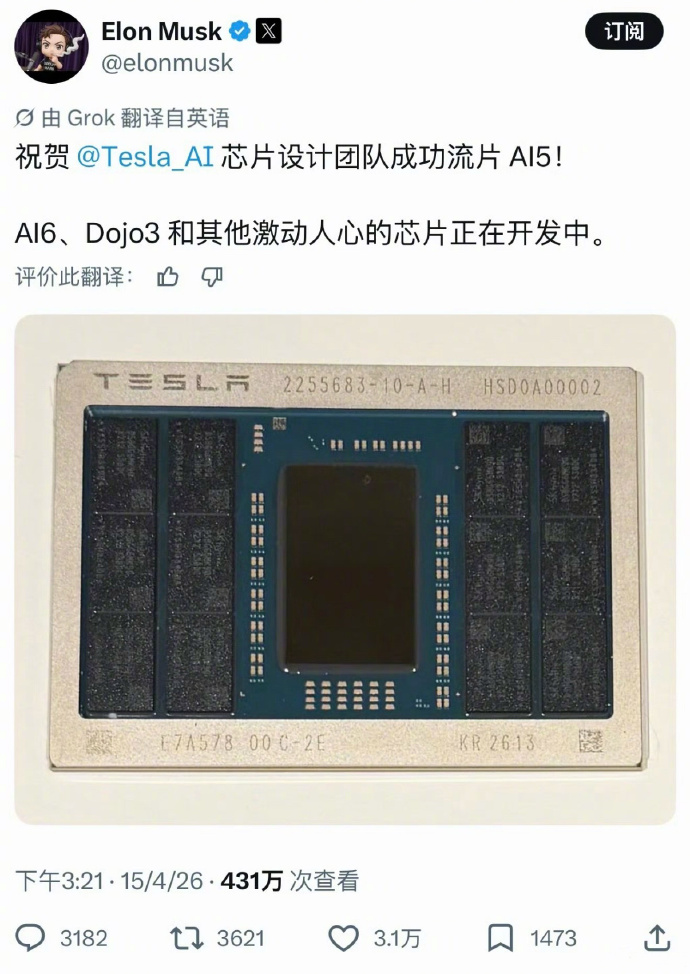
Tesla, one of the earliest companies to opt for self-developed chips, also announced last month that its latest AI 5 chip had successfully taped out. This AI chip is likewise not only intended for assisted driving.
It is reported that the AI 5 has a computing power of 2000–2500 TOPS, making it the strongest chip currently available based on data. It is expected to be mass-produced on a large scale by 2027.
However, AI 5 does not currently have a plan to be installed in vehicles; instead, it will first be used in the humanoid robot Optimus and in supercomputing centers.
In order to meet market demand, chip suppliers have also launched high-performance products.
Black Sesame Technologies unveiled the new Huashan A2000 family of chips at the Beijing Auto Show last month.
The A2000X delivers computing power of up to 1,000 TOPS and enables compute power scaling through a dual-chip high-speed interconnect architecture, supporting the operation of autonomous driving-level functions.
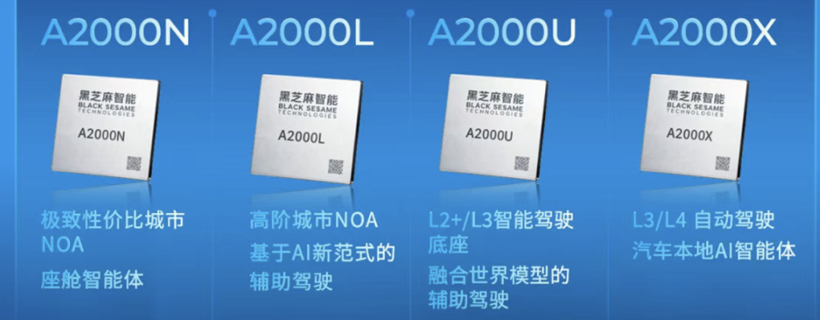
Notably, Black Sesame Technologies has pioneered a “near-memory architecture” — much like working at a desk — that no longer requires data to be shuttled back and forth from the “large warehouse” of memory, but instead accesses it nearby, effectively reducing memory costs.
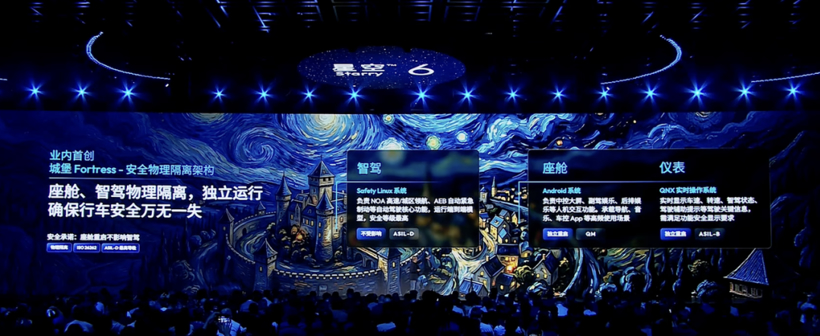
After launching the Journey J6P with 560 TOPS, Horizon unveiled the “Sky 6P,” a cockpit-driving integrated intelligent agent chip with 650 TOPS of computing power, last month.
A single chip connects the cockpit and driving systems, enabling the intelligent agent to think and control the vehicle in sync—bringing “Lobster” onboard. Integrated cockpit and driving: powerful yet flexible.
Written at the end
Since large models have become a technological hotspot, high computing power has almost become a symbol of technological advancement for various brands.
The figure for computing power has surged from the hundreds to the thousands, yet this “arms race” in chip computing power seems far from reaching its peak.
What level computing power needs to reach in order to be considered stable is still unknown.
But one thing is certain: it is only an admission ticket, and the real answer lies in practical implementation.
What is surprising is that, in this long race toward intelligence built on a silicon foundation, domestic capabilities have already moved from “following” to “running alongside,” and are even beginning to “lead” through innovation.
【Copyright and Disclaimer】The above information is collected and organized by PlastMatch. The copyright belongs to the original author. This article is reprinted for the purpose of providing more information, and it does not imply that PlastMatch endorses the views expressed in the article or guarantees its accuracy. If there are any errors in the source attribution or if your legitimate rights have been infringed, please contact us, and we will promptly correct or remove the content. If other media, websites, or individuals use the aforementioned content, they must clearly indicate the original source and origin of the work and assume legal responsibility on their own.
Most Popular
-

A Look at the Material Suppliers Behind SpaceX
-
Daily Review: Cost and Supply Support Push Polyester Bottle Film Market Higher
-

【Overseas News】Trump visits china, us auto industry issues collective appeal; china-us economic and trade talks held in south korea; celanese announces price increase
-

Major industry layoffs: BASF, Evonik, Dow, Wacker, and Others Cut 12,550 Jobs
-

【Overseas News】BASF Launches TPU Product Portfolio! Middle East Conflict Sparks Sulfur Price Surge! First Batch of Chinese Electric Vehicles Lands in Canada


