



Unveiling new energy after-sales: Manufacturers Uphold Barriers, Insurers Focus on Cost Reduction and Profitability, New Opportunities for Independent After-Sales?
Sales of new energy vehicles are surging, but the enthusiasm in the aftermarket continues to cool.
According to data from the China Association of Automobile Manufacturers, from January to October this year, the cumulative sales of new energy passenger vehicles in China reached 8.288 million units, a year-on-year increase of 38.6%, accounting for 47.8% of total passenger vehicle sales. Among them, A and B segment models have been the main contributors to sales, indicating a rapid and profound transformation in the "main force" of the car market.
The automotive aftermarket, closely linked to the car market, does not present a positive picture of transformation. From the beginning of the year with "a technician being sentenced for repairing a new energy vehicle" to the latter half of the year with "a mechanic losing a lawsuit and compensating a car company 100,000 yuan," along with various "new energy repair fire" incidents in between, the overall tone is notably negative.
In the face of the two major challenges of "judicial risk" and "safety risk," many practitioners in the automotive aftermarket have even lost the enthusiasm to explore: the timing for transformation is not mature, and in the concept of "dual service for both fuel and electric vehicles," the new energy part remains dispensable.
However, it should be noted that public opinion trends do not reflect the real market direction.
Since the beginning of this year, insurance companies, battery manufacturers, 4S groups, large chains, and leading specialty repair enterprises have all made significant progress in deploying their new energy business. Focusing on key sectors such as "cars out of warranty, accident vehicles, used cars, and commercial vehicles," various parties are consolidating resources and accelerating their penetration into the ordinary household car market.
Insurance companies, large chains, and other businesses directly facing end-users have subtly influenced the supply and demand development, resource cooperation, and other aspects of the automotive aftermarket.
01. Uncovering the Current State of New Energy Vehicle Aftermarket Repairs: Which Forces Are Most Noteworthy?
A few years ago, people would only go to 4S shops for tire changes, but now new energy vehicle owners have started to go to auto repair shops for maintenance. This shift is not only due to the relaxation of warranty terms by car manufacturers but also significantly supported by the development of large-scale chains.
This year, chains like Tuhu, JD Auto Service, Tmall Auto Service, and Tyreplus have launched a large number of exclusive products for new energy vehicles, such as tires, fluids, and films. With standardized maintenance records and strict warranty policies, the trust of new energy vehicle owners in services outside the 4S system has strengthened.
During this year's "618" period, the number of paying users for Tuhu Car Maintenance's range-extended hybrid special engine oil increased by over 230%, and the platform's new energy transaction users reached 3.4 million, an increase of 83.5% year-on-year. Consequently, regular car service shops are also encountering more and more new energy vehicle owners.
It is important to bring the in-depth new energy maintenance business involving the "three electrics" to life in the independent aftermarket.
The first category is head chains:
JD.com collaborates with car manufacturers and battery factories to avoid legal risks and build deeper expertise, such as opening an official BYD flagship store and providing original factory maintenance services, as well as co-establishing dual-brand new energy maintenance stores with CATL. By securing technical endorsements first and then gathering users, it follows the development path of "one must be strong to forge iron."
Tuhu collaborates with insurance companies to offer personalized extended warranty products based on vehicle data models. For vehicles that are over six years old, they provide online cloud inspection, offline in-depth inspection, and the more cost-effective "battery pack disassembly and repair" service.
Overall, Tuhu is focusing on the large number of new energy vehicle owners whose warranties have expired. They have integrated authorizations from 12 battery manufacturers and collaborated with insurance companies to provide a third-party protection system, which has already been implemented in cities such as Shanghai, Guangzhou, and Shenzhen.
Other automotive aftermarket chains, such as Huasheng and Baiyuan Jingyang, are exploring the possibility of popularizing and implementing in-depth maintenance of new energy vehicles in independent aftermarket stores through business models like "specialized vehicle repair" and "store-in-store." Correspondingly, the establishment of a new energy vehicle parts system is being developed in cooperation, with supporting systems such as "dismantled parts" and "branded parts" quietly emerging.
The second category includes battery manufacturers and other brand parties:
Contemporary Amperex Technology Co., Limited (CATL) has launched "Ning Home Service," initiating a strategic extension from B2B to B2C. Based on its core advantages in underlying technology and data of power batteries, CATL has developed exclusive non-destructive testing technology and equipment that can complete fault detection in just 15 minutes with an accuracy of over 90%. This implies that the threshold for independent aftermarket enterprises to enter the field of new energy vehicle maintenance is likely to be further lowered.
Motor and electronic control component companies such as Huichuan Motors are also incubating their own three-electric maintenance brands. Although the current business scale is relatively small, the technical backing as a source supplier provides substantial support to independent after-sales companies. At this stage, their business expansion is often accompanied by battery factories. For instance, in provinces like Guangzhou and Jiangsu, the companies they collaborate with are basically partner stores serving Ningjia.
In addition, brands like Shell and Mobil, in response to the need for energy transition within their chain systems, have adopted more "localized" strategies to ensure practical business implementation. They collaborate with new energy maintenance enterprises in their regions, achieving technological reserves while also exploring the introduction of insurance company-referred accident repair orders in some premium stores. This approach has essentially been successfully implemented in the ride-hailing fleet support services.
The third category is the new energy independent maintenance system led by insurance companies.
People's Insurance and Bangbang Auto Service have jointly launched the "Zhongbao Smart Repair" chain, with the Beijing flagship store already in operation and the first franchise store opened in Ganzhou, Jiangxi. Currently, the support behind this chain is rapidly growing. Firstly, Bangbang Auto Service and Youpai Energy are co-establishing a green recycling center for automotive parts. Secondly, the Zhongbao Smart Repair New Energy Technology Center has been established, focusing on building a model of "insurance + remanufacturing + battery repair."
In addition, PICC has also partnered with other auto service chains and 4S groups to establish comprehensive service centers, covering services such as electric vehicle repair and damage assessment. At the same time, further "tracing back to the source," automakers share data on battery cycle times and charging habits to optimize pricing models. Collaborating with CATL, they are piloting power battery capacity insurance, and have teamed up with over 300 certified repair institutions to address the "battery anxiety" associated with second-hand cars.
Similarly, Ping An is accelerating the establishment of certified new energy specialized repair shops. It has currently completed the certification of 61 new energy specialized repair shops, with a target to cover 300 shops. By centralized procurement, it aims to reduce the cost of parts to 30%-40% of the market price. Notably this year, Ping An has been rapidly advancing its "store-within-a-store" business model through multi-party cooperation with Zhongsheng Group and "Electric Donkey Express Repair."
02. Claims cost reduction is urgent, business advancement relies on insurance companies, what should repair shops do to keep up?
The explosive growth of new energy vehicles has led to a consensus among car owners that insurance premiums and repair costs are expensive. In relation to this, in accident claims, disputes over "sky-high battery prices" have made car owners increasingly aware that the lack of diverse repair channels is a key reason for the high insurance premiums.
Insurance companies are naturally more eager than car owners. In 2023 and 2024, insurance companies have incurred underwriting losses of 6.7 billion and 5.7 billion yuan, respectively, on new energy vehicles. Taking 2024 as an example, out of 2,795 car series underwritten by insurance companies, 137 have a claim payout ratio exceeding 100%, with some series having a payout ratio as high as 150% or more. Coupled with high repair costs, insurance companies urgently need to reverse this passive situation.
Due to this, almost all independent new energy maintenance companies currently have collaborations with insurance companies. Furthermore, as the independent maintenance technology for the three electric systems matures, insurance companies are accelerating the introduction of orders to promote the widespread adoption of this business.
A representative from a leading insurance company has revealed that at this stage, they are directing new energy vehicle owners to designated repair centers, primarily targeting older vehicles that have exceeded the official warranty period, vehicles with significant damage from accidents, and second-hand new energy vehicles.
The core group consists of older vehicles that are no longer under warranty and have significantly depreciated in value, resulting in a corresponding decrease in the insured amount for vehicle damage. In the event of an accident, the repair costs often exceed the insured amount. If the other party is at fault, the compensation amount will be even lower, making a total loss claim not cost-effective. However, by having the vehicle repaired at an institution designated by the insurance company, the vehicle's usage value is preserved, and there is also a warranty for accident repairs.
Similarly, for severely damaged cars in accidents, the approach of "use value > vehicle residual value" is equally effective. For owners of second-hand new energy vehicles, accepting designated third-party repair agencies is not difficult under the pursuit of cost-effectiveness. With accident repair warranties, insurance company endorsements, and additional benefits such as complimentary paint restoration, it is evident that the trust of new energy vehicle owners in third-party repairs is increasing.
When a large number of users enter the independent aftermarket system for new energy vehicles, the maintenance ecosystem based on data, technology, spare parts, and recycling established by insurance companies also begins to operate normally. This, in turn, forces the original equipment manufacturers to relax on key issues such as access rights and spare parts, leading to a decrease in the maintenance costs of new energy vehicles.
Based on data from the first half of this year, the compensation dilemma for new energy has somewhat resolved, with leading insurance companies achieving profitability in their new energy vehicle insurance business.
PICC underwrote 6.16 million vehicles, with premium income of 28.6 billion yuan. The family car sector achieved underwriting profitability, and the commercial insurance combined cost ratio decreased by 5 percentage points year-on-year.
Ping An Property & Casualty Insurance underwrote 5.75 million vehicles, with premium income reaching 21.7 billion yuan, a year-on-year increase of 46.2%, and a market share of 27.6%.
PICC Property and Casualty Company insured 5.36 million vehicles, with premium income of 10.596 billion yuan. The share of new energy vehicle insurance increased from 14.1% to 19.8%, and the household car business has achieved profitability.
On one hand, the scale of premiums has grown, and on the other hand, the comprehensive cost ratio has been continuously decreasing. In the crucial task of "reducing claims costs" for insurance companies, the independent repair system and construction cooperation have contributed significantly.
The insurance company can be said to be the core driver for the implementation of new energy maintenance business in the automotive aftermarket. As the saying goes, "He who wins the users, wins the world." The implementation of any business model is fundamentally reliant on directing user traffic.
Based on the above, focusing on repair shops that want to transition to new energy, the underlying reason behind learning technology, seeking partnerships, and choosing institutions is still to embrace insurance companies. In fact, this was also the fundamental way to expand and strengthen businesses in the era of fuel vehicles. However, the basic maintenance and repair business for new energy vehicles has "low repurchase rates, low output value, and many hassles," which is insufficient to support the survival needs of 400,000 auto repair shops, thereby making structural conflicts unavoidable.
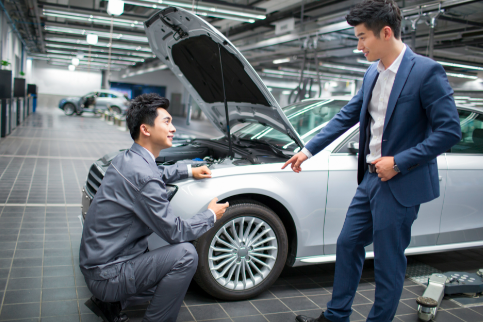
AC Auto has compiled feedback from some successfully transformed stores. At this stage, the two points that truly need attention are as follows:
One aspect is that the investment in equipment and technology for "three-electric" maintenance is indeed a significant amount. Especially if one wants to cooperate directly with insurance companies, they must meet extremely stringent requirements for licenses, qualifications, and site conditions. Currently, a relatively quick and effective way for small and medium-sized shops is to align with larger stores, paying tuition and commissions to ensure the technology is not wasted. Once the technology and management are mature, they can then seek cooperation with insurance companies.
Secondly, the profit margin is basically transparent. The main reason lies in the supply of parts, and since insurance companies often recommend them, finding your own parts could lead to failures, especially in terms of decoding. Moreover, with warranty requirements for accident repairs, insurance companies are particularly strict in the stage of building trust with car owners, and shops do not dare to operate freely. Additionally, as the insurance companies have streamlined data from the manufacturers and actuaries are in control, repair shops find it difficult to earn any extra profit.
Regarding the fire risk discussed by the public, there is a basic common knowledge that new energy repair companies will purchase insurance. For example, when a new energy repair shop in Henan caught fire, many peers exaggerated the situation, and the owner had to come forward to "refute the rumors," stating that there was insurance to cover the losses, which were not significant. What truly needs attention is whether the technology can keep pace, whether the management is standardized, and whether suitable talent can be found.
Written at the End
The car market is bustling, and amidst the flow of information, much of it has become distorted and ineffective. The attention of industry professionals on new energy vehicle maintenance is inevitably affected, with the real development trends being overshadowed by so-called "hot events."
In summary of the current state of new energy maintenance, a significant feature is that under the facilitation of insurance companies, battery manufacturers, leading chains, and other forces are accelerating resource cooperation, while also encouraging OEMs to embrace openness and collaboratively build diverse after-sales maintenance channels.
For car owners and the industry, the reduction in costs for new energy vehicle maintenance is a clear advancement, and adequate competition will further drive market prosperity and activity. We look forward to it together.
【Copyright and Disclaimer】The above information is collected and organized by PlastMatch. The copyright belongs to the original author. This article is reprinted for the purpose of providing more information, and it does not imply that PlastMatch endorses the views expressed in the article or guarantees its accuracy. If there are any errors in the source attribution or if your legitimate rights have been infringed, please contact us, and we will promptly correct or remove the content. If other media, websites, or individuals use the aforementioned content, they must clearly indicate the original source and origin of the work and assume legal responsibility on their own.
Most Popular
-

At Least 44 Dead in Century-Old Fire! Questioning Hong Kong's Hong Fu Garden: Why Has the Path to Fire Resistance Taken 15 Years Without Progress?
-
Satellite chemical's profits surge! can the 26.6 billion yuan high-end new materials project meet expectations? a review of progress on four major projects
-
U.S. Appeals Court Officially Rules: Trump Tariff Unlawful and Void!
-
Estun Turns Profitable in 2025 Half-Year Report, Industrial Robot Shipments Rank First Among Domestic Brands
-
Avatr Files for IPO on HKEX, Plans to Complete Listing in Q2 2026

