



Mobileye Chen Yunxiang Discusses Methodology to Assist Chinese Automakers Going Global: Safety as the Foundation, Collaboration and Flexibility as the Wings
Currently, Chinese car companies are entering a deep-water zone from "going out" to "integrating in." Independent automakers like BYD have achieved a transition from "product export" to "local production and operations" through overseas factories and supply chain collaboration; new forces such as Xiaopeng and Leap Motor are leveraging overseas partners to access global markets with their technological strength.
As automakers increasingly localize their overseas operations and refine their operations, driver assistance systems have become a key component of vehicle competitiveness. How to adapt to the regulations, road conditions, and user habits of different markets has become an unavoidable core issue in the globalization process of Chinese automakers.
In the view of Chen Yunxiang, Head of Strategy and Business Development for Mobileye in China, this process contains both significant opportunities and multiple challenges. Choosing partners with global experience and technological expertise will be a key step for Chinese automotive companies to safely cross the threshold of going abroad.
Car companies want more than just suppliers.
From the data for the whole year of 2024, passenger vehicles in China account for about 30% of the global market. Meanwhile, the pace of Chinese car companies expanding overseas is accelerating year by year. Since 2023, Chinese car exports have achieved leapfrog growth, and going abroad will undoubtedly become a new driving force for the growth of China's automotive industry. Of course, behind the structural opportunities in the incremental market, the challenges are equally severe.

Chen Yunxiang, Head of Strategy and Business Development for Mobileye China
According to Chen Yunxiang's summary, the challenges mainly come from three aspects:
First is the compliance threshold. There are significant differences in traffic signs, regulations, and other aspects across different countries and regions. In her view, "it is important to choose a solution that can adapt globally, rather than starting from scratch with a completely new set in every emerging market."
Secondly, there is the localization adaptation of user experience. In different regions, users have varying driving habits and different demands for driver assistance features. For example, in some Southeast Asian markets, where the population is dense and road conditions are complex, users may be more inclined to seek driver assistance systems that can handle complex road situations and demonstrate strong passing capability. In contrast, in Europe, users place more emphasis on the safety of the system and its alignment with their driving habits. In this regard, Chen Yunxiang stated, "Meeting regulations is a basic threshold, but achieving true safety, localized experience, and alignment with local users' driving expectations is a deeper challenge."
Moreover, the sustainability of the supply chain is also a concern for car companies expanding overseas. At present, assisted driving has become a fiercely contested area, with new players accelerating their entry into the market and the market structure changing rapidly. Therefore, from a supply chain perspective, stability and sustainability are crucial for car companies.
Faced with these complex and intertwined challenges, Chen Yunxiang believes that Chinese car companies need not only a technology supplier but also a long-term partner with global deployment experience and the ability to provide stable support. Mobileye's core value for Chinese car companies going global is reflected in its safety, high performance, and mass production experience that has been validated by the global market, along with scalable solutions.
As of now, Mobileye has equipped over 200 million vehicles worldwide with its chips, matching over 1,200 vehicle models and covering more than 50 original equipment manufacturers globally. With its extensive experience in large-scale production around the world, Mobileye provides Chinese automotive companies with a "foundation of experience" to cope with uncertainties and achieve successful overseas expansion.
The self-research of car companies does not conflict with Mobileye.
Faced with the complex market demands and regulatory environments in the process of Chinese automotive companies going global, a singular technical solution or rigid cooperation model can no longer meet the challenges of this global test. Mobileye has established a highly collaborative and scalable technical architecture, along with a flexible business model, providing Chinese automotive companies with a systematic solution that combines global capabilities and localized agility.
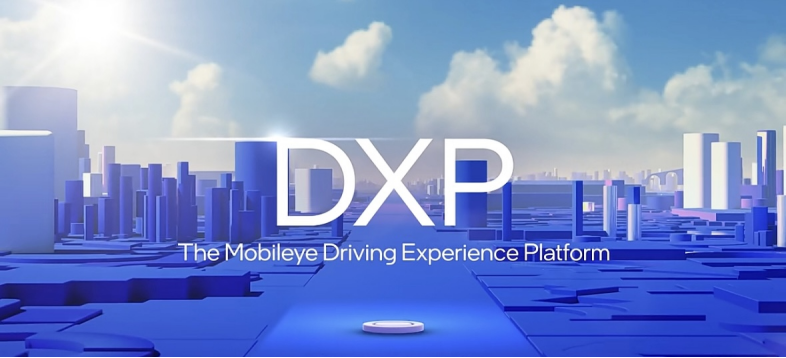
Image source: Mobileye
From the outset of platform design, Mobileye has already considered the high synergistic effect of its overall product series map. For instance, the Mobileye DXP Driving Experience Platform, based on a unified hardware architecture and software algorithm base, can flexibly adapt to different needs of car manufacturers, providing differentiated and personalized solutions. Regarding this, Chen Yunxiang further explained: "Mobileye's adaptation in different markets is 'incremental' rather than starting from scratch, which means lower investment and faster implementation for OEMs."
This high level of synergy is attributed to Mobileye's EyeQ™ series of chips. According to Chen Yunxiang, "Mobileye uses chips as the foundational backbone element, and combined with the main perception framework, it can be locally and customarily adjusted according to the specific needs of different markets and car manufacturers." Based on this architecture, the functional evolution from basic driver assistance to advanced autonomous driving is no longer a revolutionary overhaul but rather a highly synergistic and complementary, gradual evolution.
For example, using Mobileye's product matrix, the monocular integrated solution for mainstream vehicles meets the requirements of global multi-market regulations with highly competitive costs. Meanwhile, the surround ADAS solution, achieved by increasing the number of cameras and radar, can expand from L2 single-lane functionality to point-to-point highway pilot assistance features.
Chen Yunxiang stated that even the L3-level autonomous driving system is based on a pure vision SuperVision™ system, "with an additional layer of radar and forward-facing lidar for redundancy." The Robotaxi solution is built on the L3 foundation with additional layers of chips and perception systems. She emphasized, "Mobileye's development from basic driver assistance to L4-level Robotaxi is an incremental process that is scalable and highly collaborative." This technological evolution path not only significantly reduces R&D costs and system complexity but also ensures smoothness and reliability in technology upgrades.
Behind this technological approach lies Mobileye's profound insight into industry demands. Chen Yunxiang candidly stated, "Automakers need safety, performance, and cost-effectiveness." Therefore, from the initial design phase, Mobileye incorporated these three key elements into its core considerations, seeking the optimal balance across the full range of solutions from economical to flagship models through precise product definition. This philosophy enables automakers to flexibly choose the most suitable technical configuration based on their market positioning and budget.
How to transform technical advantages into customer value in the final mile? Mobileye's answer is: flexible and diverse cooperation models to meet the multiple needs of customers.
Currently, the trend of automakers developing their own driver assistance systems has become prominent, with new forces represented by "Weilai, Xiaopeng, and Li Auto," as well as domestic brands like BYD and Geely joining this trend. Self-developed systems can offer certain advantages in hardware unification and cost control, but they may face significant challenges in dealing with high regulatory thresholds overseas, adapting to localized driving behaviors, and coordinating multinational R&D resources.
Beyond the technical architecture, Mobileye's collaboration model also demonstrates great flexibility. In the face of the significant differences among various car manufacturers in terms of self-research level, resource investment, and market expansion pace, Chen Yunxiang stated, "Self-research and Mobileye are not in conflict, nor are they contradictory."
From providing foundational empowerment with "chips + perception" to offering complete "full-stack turnkey" solutions, and further to providing modular support for specific aspects of automakers' self-research systems, Mobileye offers diversified and personalized services to OEMs, achieving dynamic alignment with customer needs.
Rationality is not a return, but a consistent adherence.
Under the dual challenges of the computing power competition and delivery speed in the driver assistance industry, Mobileye has its own considerations. Based on a rational technological logic that is "goal-oriented" and a deep cultivation of local operational capabilities, Mobileye has found a balance between global standards and China's speed.
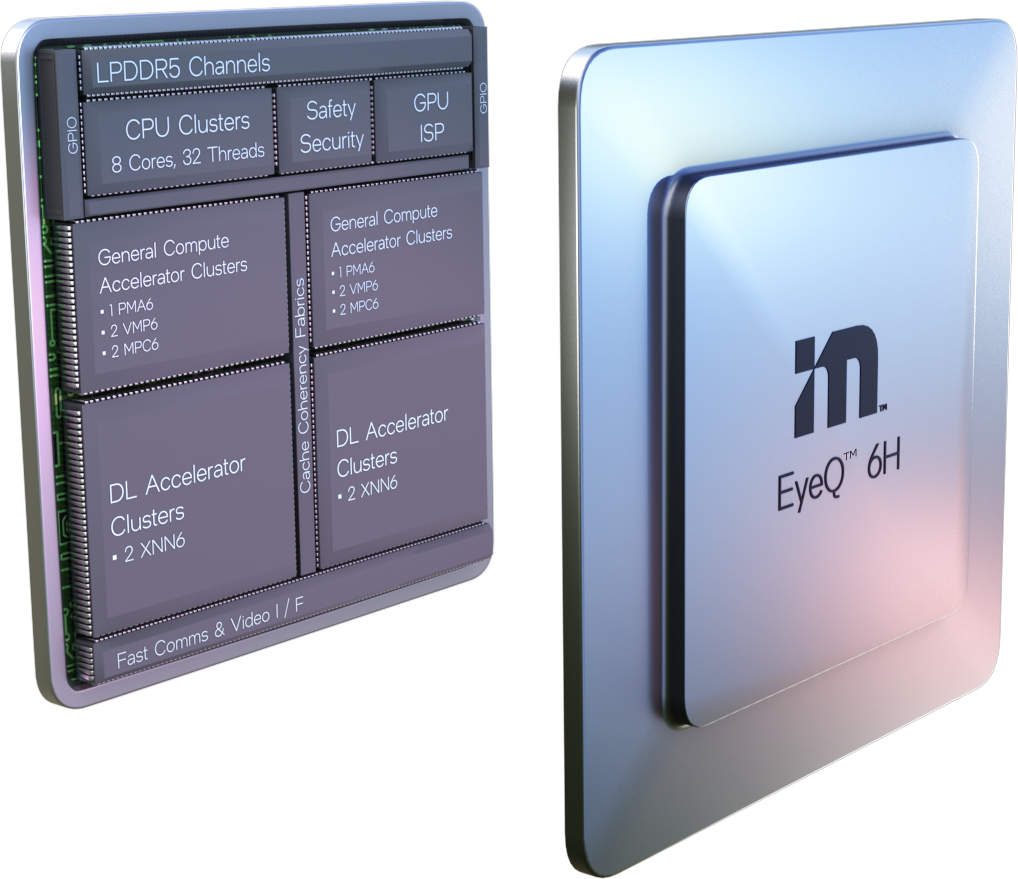
Image source: Mobileye
Currently, the competition in the field of assisted driving is becoming increasingly intense, with the industry once caught in a "computing power arms race." However, Mobileye has remained quite rational, not merely pursuing computing power, but focusing on user safety, experience, and cost. Because of this, although the computing power of the EyeQ™6H is only twice that of the previous generation, its FPS (frames per second) metric is ten times that of the previous generation. This means that the EyeQ™6H chip can process a large amount of image data and complex computational tasks more quickly and smoothly during actual operation.
This rational thinking also guides Mobileye's technology development path. Chen Yunxiang explained that Mobileye first clarifies the target performance it wants to achieve, then works backward to determine the chip design requirements. Therefore, for Mobileye, there is no concept of "computing power returning to rationality," because from the initial chip design phase, Mobileye adheres to a rational attitude. This design philosophy ensures that the technological route consistently serves the real user experience, rather than getting caught up in a race of parameters.
In response to the fast-paced of Chinese auto companies, Mobileye has also launched relevant localization practices. Chen Yunxiang revealed that the first generation of SuperVision™ was actually the first to be implemented in the Chinese market, demonstrating Mobileye's commitment to the "speed" of the Chinese market. By the time of the EyeQ™6H stage, thanks to the mature design of the platform and more refined core algorithms, Mobileye is able to quickly customize adaptations based on the specific needs of Chinese OEMs.
To better respond to the fast pace of R&D in China, Mobileye has also established an in-depth local service system. According to Chen Yunxiang, for specific projects, Mobileye will spare no effort to build or expand local teams and provide on-site support to ensure a quick response to customer needs.
In the next 1-2 years, Chen Yunxiang has clarified Mobileye's work focus: "Our current priority is to execute existing projects well and ensure their successful implementation." This includes solutions such as the surround-view ADAS™ based on the EyeQ™6H chip, SuperVision™, Chauffeur™, and Drive™ for Robotaxi. Currently, these projects are progressing steadily, and these solutions are expected to begin mass production and implementation over the next 1-2 years.
Meanwhile, Mobileye also maintains a continuous focus on the forefront of technology, aiming to empower the continuous iteration of assisted driving with the latest AI technology—something Chen Yunxiang considers an "eternal topic."
Conclusion:
Mobileye's modular technology architecture allows for flexible adaptation to different market and customer needs while maintaining core hardware consistency. This feature perfectly aligns with the demands of automotive companies going abroad for global solutions that also cater to local needs.
Moreover, Mobileye's development strategy balances short-term delivery with long-term technological iteration—focusing on the solid implementation of existing projects while continuously investing in the research and development of next-generation technologies. In the context of the rapid evolution of assisted driving technology and intensified global market competition, Mobileye's solutions may provide more technological support and feasible paths for automakers' overseas expansion.
In summary, Mobileye, with its global technological foundation, global deployment experience, localized service capabilities, and the continuous evolution of competitiveness in these areas, is becoming a trusted "companion" for Chinese automotive companies in their overseas expansion process.
【Copyright and Disclaimer】The above information is collected and organized by PlastMatch. The copyright belongs to the original author. This article is reprinted for the purpose of providing more information, and it does not imply that PlastMatch endorses the views expressed in the article or guarantees its accuracy. If there are any errors in the source attribution or if your legitimate rights have been infringed, please contact us, and we will promptly correct or remove the content. If other media, websites, or individuals use the aforementioned content, they must clearly indicate the original source and origin of the work and assume legal responsibility on their own.
Most Popular
-

At Least 44 Dead in Century-Old Fire! Questioning Hong Kong's Hong Fu Garden: Why Has the Path to Fire Resistance Taken 15 Years Without Progress?
-
Satellite chemical's profits surge! can the 26.6 billion yuan high-end new materials project meet expectations? a review of progress on four major projects
-

U.S. Appeals Court Officially Rules: Trump Tariff Unlawful and Void!
-
Estun Turns Profitable in 2025 Half-Year Report, Industrial Robot Shipments Rank First Among Domestic Brands
-
Avatr Files for IPO on HKEX, Plans to Complete Listing in Q2 2026

