



Can China's Chemical Industry Transform From Large To Strong And Reshape The Global Landscape During The "15th Five-Year Plan"?
China produces approximately 42% of the world's major chemical products, with a total output surpassing that of the United States, Japan, and Germany combined. Since 2010, China has been the world's largest chemical producer, but it is large yet not strong, with prominent contradictions.
In the 2024 Global Top 50 Chemical Companies, there are 11 companies from China, with a total revenue of 2.1 trillion yuan, accounting for 27.9% of the total revenue of the top 50. This is 1.35 times that of American companies and far exceeds traditional chemical powerhouses like Germany and Japan.
In 2024, the output value of China's chemical industry reached 16.28 trillion yuan, accounting for 12.07% of the national GDP. During the five-year period of the 14th Five-Year Plan, the total output value of China's chemical industry increased by 45%.
1. Major achievements, where are they manifested?
China's chemical industry is large in all aspects and is systematically large, with its scale advantages reaching a historical peak.
From basic chemical raw materials to high-end synthetic materials, from petrochemicals to coal chemicals, a global most complete chemical industry system has been established.
In 2024, the national crude oil processing capacity is expected to reach 923 million tons, with refining business revenues of 4.8 trillion yuan, accounting for 30% of the total revenue of the chemical industry for the year.
In 2024, China's total ethylene production capacity will reach 55 million tons per year, accounting for 23.4% of the global total capacity, making it the largest in the world.
In 2024, the total production of synthetic resins in China is expected to reach 127 million tons, accounting for one-third of the global total, with an average annual growth rate of 8%. China is the largest producer and consumer in the world.
2. What other challenges are not strong?
The biggest characteristic of China's chemical industry is that it is large but not strong.
The self-sufficiency rate of high-end materials is not high.
Currently, the overall self-sufficiency rate of new chemical materials in China is relatively high, but high-end materials still rely on imports.
China's special engineering plastics have a production capacity of only 20% of the global total, with a self-sufficiency rate of less than 47%, and most of the products are still in the low to mid-end range.
In the electronic chemicals business, the localization rate of photoresists is approximately 25%, wet chemicals about 50%, and electronic gases about 60%.
The profitability of the enterprise is significantly lower compared to international giants.
In terms of the average profit margin of the world's top 50 chemical companies, Chinese companies stand at 3.3%, while German companies are at 11.3%, American companies at 10.7%, and Japanese companies at 9.5%.
In the list of the world's top 50 chemical companies, Chinese enterprises account for approximately 27.9% of the revenue, while the profit situation can be described as dismal.
The intensity of R&D investment is severely insufficient.
The investment in research and innovation in China's chemical industry is far lower than that of strong chemical countries such as Europe, the United States, and Japan. China accounts for only 0.77% of industry sales, while Europe is at 1.2%, the United States at 1.79%, and Japan at 3.3%.
Insufficient investment in research and development is also a main reason for the low self-sufficiency rate of high-end materials.
Three, six major enhancements, possibly the path from big to strong.
Facing challenges, in the next five years, China's chemical industry may systematically improve in the following six areas to change its status of being large but not strong.
To elevate the high-end nature of the industrial structure, the shift from "fuel-driven" to "material-driven" has already surpassed numerous obstacles in the demand for refined oil. The impact of new energy on fuel oil consumption will also continue to rise wave after wave.
Enhancing the innovation capability within and outside the industry chain requires significant investment, ranging from optimizing existing processes, which we are good at, to foundational theories and original innovations, which we are less proficient in.
Following innovation should continue to flourish, while pioneering innovation still needs constant breakthroughs.
Enhance the level of green low-carbon development, implement dual control requirements for total carbon emissions and intensity, transform the thinking of "end-of-pipe treatment," and lead systematic carbon reduction through technology.
Enhance the level of intelligent manufacturing, deeply integrate the "AI + Chemical" strategy, and leverage AI to accelerate the rapid development of chemical applications.
Enhance and deepen international cooperation, gradually transforming from industry "participants" to industry "leaders," with complementary technologies, co-built ecosystems, and shared rules.
To enhance the development quality of chemical industrial parks, by August 2025, there will be 729 nationally recognized chemical parks, with only 22 parks having an output value exceeding 100 billion yuan. There are still many small and medium-sized parks with low development quality that have not fully utilized the advantages of the parks.
Key Areas: Overcoming "Bottleneck" Problems
In the field of high-end chemical new materials, there are still five sub-sectors in China that face significant bottleneck issues, which urgently need public relations breakthroughs for resolution.
In the field of high-end chemical new materials, China's import value of synthetic resins will reach 41.43 billion USD in 2024, with a trade deficit of 13.92 billion USD.
Especially in the series of products such as metallocene polyethylene, polyolefin elastomers, polycarbonate, and nylon, the localization rate of high-end products has increased.
The localization of electronic chemicals in China currently stands at a self-sufficiency rate of 66.7%. The goal for the 14th Five-Year Plan is to achieve an overall self-sufficiency rate of at least 85%.
Large-size semiconductor silicon wafers, high-purity electronic specialty gases for integrated circuits, PPT-grade wet electronic chemicals, EUV photoresist, and other products are critical "bottleneck" products that need to achieve a significant level of self-sufficiency.
Not seeking to cover everything comprehensively, nor striving to be the best in one area, but at least achieving self-sufficiency in key fields.
High-performance new energy materials, especially high energy density new energy materials such as lithium-rich manganese-based cathodes and silicon-based anodes, can help increase the energy density of lithium batteries to over 400Wh/kg.
Biobased materials and specialized materials for humanoid robots are also very important and may become a major development direction in the future. The earlier and faster the layout, the greater the benefits.
Humanoid robots' new chemical materials mainly include lightweight materials, dexterous hands, and electronic skin materials, such as polyether ether ketone, polyphenylene sulfide, carbon fiber, thermoplastic elastomers, etc. These are top-tier high-end materials, even materials at the pinnacle of the material pyramid.
Five, future outlook: transforming from large to strong during the 14th Five-Year Plan period.
The "Fifteenth Five-Year Plan" will undoubtedly be the most critical period for the high-quality development of China's chemical industry.
Before 2027, chemical production capacity will continue to expand and reach its peak, source resource expansion will accelerate, and large enterprises will complete comprehensive layout and initial foray into emerging fields.
After 2030, large-scale capacity will gradually be replaced, industry profits will gradually recover, bulk chemicals will enter an oligopolistic competition stage, and specialty chemicals and materials companies will gradually achieve import substitution and begin to expand overseas.
By 2030, most chemical products in China are expected to achieve both scale and efficiency, high-end materials will basically be self-sufficient, and there will be a large number of enterprises with global competitiveness and influence.
Dreaming of becoming stronger in the next five years, we aim to reshape the competitive landscape of the global chemical industry. This requires profound changes, far-reaching strategic planning, and immense courage and sacrifice.
【Copyright and Disclaimer】The above information is collected and organized by PlastMatch. The copyright belongs to the original author. This article is reprinted for the purpose of providing more information, and it does not imply that PlastMatch endorses the views expressed in the article or guarantees its accuracy. If there are any errors in the source attribution or if your legitimate rights have been infringed, please contact us, and we will promptly correct or remove the content. If other media, websites, or individuals use the aforementioned content, they must clearly indicate the original source and origin of the work and assume legal responsibility on their own.
Most Popular
-

At Least 44 Dead in Century-Old Fire! Questioning Hong Kong's Hong Fu Garden: Why Has the Path to Fire Resistance Taken 15 Years Without Progress?
-
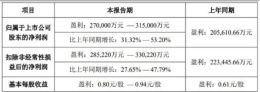
Satellite chemical's profits surge! can the 26.6 billion yuan high-end new materials project meet expectations? a review of progress on four major projects
-

U.S. Appeals Court Officially Rules: Trump Tariff Unlawful and Void!
-
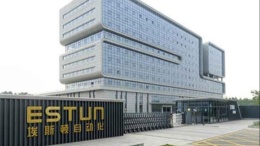
Estun Turns Profitable in 2025 Half-Year Report, Industrial Robot Shipments Rank First Among Domestic Brands
-
Avatr Files for IPO on HKEX, Plans to Complete Listing in Q2 2026

